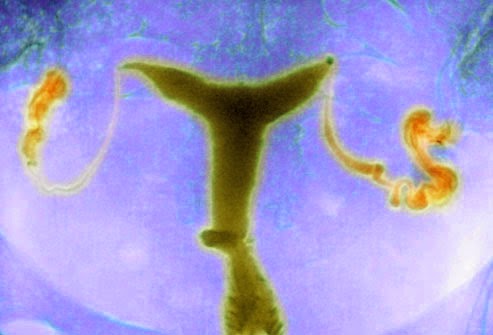
Showing posts with label Female infertility treatment. Show all posts

Thursday, 28 August 2014

Infertility: Problems With the Man's Reproductive System


The most common cause of male infertility is low sperm count. Absence of sperm in the semen is less common, affecting 1 out of 100 men and affecting 10 to 15 out of 100 infertile men.

Causes of sperm count problems include:
  • Hormonal problems in the testicles or pituitary gland. The pituitary gland releases hormones that stimulate the testicles to produce testosterone.
  • Testicular injury or failure, either present at birth (congenital) or associated with radiation or toxic chemical exposure.
  • Cancer treatment with certain kinds of chemotherapy or radiation.
  • Antibodies that attack sperm and that also may be present in semen. Sperm antibodies sometimes develop when a man's sperm has been exposed to his immune system (outside of the testicles). This may happen after a vasectomy, an infection, or an injury to the testicles.
  • Drug use (some prescription medicines, use of tobacco).
Structural Problems

These include:

  • A varicocele in the testicles.
  • Blocked ejaculation due to a surgical vasectomy.
  • Absence of a vas deferens (a birth defect that may be associated with thecystic fibrosis genes).
  • Retrograde ejaculation (the ejaculation of semen into the bladder rather than out through the penis).
  • Chromosomal problems (such as Klinefelter syndrome).
  • Genetic problems.
Male Reproductive System

About Male Infertility Treatment :

Many people think of infertility as a "woman's problem," although in about 40% of infertile couples, the man is the sole cause or a contributing cause of the inability to conceive. One-third of infertility cases can be attributed to male problems, including low sperm count. A visit to a urologist should start the evaluation for male infertility.

About Female Infertility Treatment : 

Infertility, whether male or female, is defined as the inability of a couple to achieve conception or bring a pregnancy to term after a year or more of regular, unprotected sexual intercourse. For women over age 35, this condition is diagnosed after 6 months of an inability to conceive.

To know more about Infertility Treatment in Mumbai, Contact us at : 

PARAKH HOSPITAL
Khokhani Lane, Opp. Ghatkopar Rly. Stn., 
Ghatkopar (E), Mumbai - 400 077
Phone: 022 - 67827000 / 7004 / 7005
Fax: 022 - 6782 7007
Emergency: 9821125519/9821237708
Email: info@fertilityfirst.in

Thursday, 14 August 2014

Which Infertility Treatment Is Right for You?


Infertility Treatments That Work
Worldwide, more than 3 million babies have now been born through in vitro fertilization (IVF). Other therapies are successful, too -- at least half of couples who seek treatment for infertility will get pregnant. 


Symptoms of Infertility
Most couples should consult a doctor after a year of trying to conceive unsuccessfully. This is the main sign of infertility. If the woman is over age 35 and hasn't conceived after trying for six months or has an irregular menstrual cycle, it's best to see a doctor as soon as possible. Remember that the man should be evaluated, too. Male infertility is just as common as female infertility. 


Male Infertility
In about 40% of infertile couples, the cause is traced to the man. Common problems include:
Low sperm count
Poor sperm motility
Malformed sperm
Blocked sperm ducts

Female Infertility
In another 40% of cases, the woman is diagnosed with a problem, such as:
Irregular ovulation (release of eggs)
Blocked fallopian tubes
Abnormalities in the cervix or uterus
In about 20% of infertile couples, no cause can be found. 


Tracking Ovulation
In some cases, poor timing is the main obstacle. To find out when you're ovulating (and determine the best time for sex), you can use over-the-counter ovulation tests. These detect a hormonal surge that occurs 12 to 36 hours before the ovary releases an egg. If the tests never yield a positive result, consult your doctor. Irregular ovulation accounts for about a third of all cases of infertility. 

Fertility Drugs
If your doctor determines you're not ovulating normally, fertility drugs can help. The most common choice is clomiphene citrate, better known by the brand names Clomid and Serophene. This drug is relatively inexpensive and effective. About half of women who take clomiphene will get pregnant, usually within three cycles. By causing the release of more than one egg at a time, Clomid increases the chances of multiple births. 

Injectable Hormones
If you don't get pregnant after taking clomiphene for six months, your doctor may recommend injections of fertility hormones. A wide range of hormonal drugs are available, and they are highly effective in stimulating ovulation. Of those who ovulate, about half become pregnant. Like clomiphene, injectable hormones increase the chances of becoming pregnant with multiples. 

Surgery for Blocked Fallopian Tubes
Some women have trouble getting pregnant because scar tissue prevents eggs from traveling down the fallopian tubes. This scarring can be caused by endometriosis, the overgrowth of tissue that lines the uterus, a history of pelvic infections, or previous surgeries. Laparoscopic surgery can remove scar tissue in the reproductive tract and boost the odds of getting pregnant for some women. 

Intrauterine Insemination (IUI)
Intrauterine insemination (IUI) is a popular option for a wide range of fertility problems. In this procedure, the sperm is placed directly into the woman's uterus while she is ovulating. This reduces the distance the sperm must swim to reach the egg. IUI is often used in combination with drugs that stimulate ovulation. It is less expensive and less invasive than IVF, but pregnancy rates are notably lower. 

IUI With Donor Sperm
If the man has few healthy sperm, IUI can be done using sperm from a donor. Most doctors recommend couples see a counselor before choosing this option, because they must be comfortable raising a child who is not biologically related to the father. IUI with donor sperm has a very high success rate in fertile women. It may take several tries, but cumulative pregnancy rates are over 80%. 

In Vitro Fertilization (IVF)
IVF offers hope when other infertility treatments are unsuccessful. It eliminates any barriers between egg and sperm by combining them in a lab. The growing embryos are then placed inside the uterus. Undergoing IVF can be unpleasant and expensive, with an average cycle costing $12,400. But success rates are growing every year. In 2012, IVF resulted in 61,740 births in the U.S., the most ever reported. 

IVF With ICSI
When a man's sperm count is extremely low or the sperm don't move well, they may not be able to fertilize an egg without help. A procedure called intracytoplasmic sperm injection (ICSI) can overcome this problem by inserting a single sperm directly into an egg. The resulting embryos are then transferred to the uterus through the normal IVF procedure. The majority of IVF cycles now use ICSI. 

IVF With Donor Eggs
Women who are over 40, have poor egg quality, or have not had success with previous IVF cycles may consider IVF with donor eggs. This involves combining the husband's sperm with another woman's eggs. If the procedure is successful, the wife becomes pregnant with a baby who is biologically related to her husband but not herself. In 2009, IVF using fresh embryos from donor eggs resulted in live births 55% of the time. 

IVF and Multiples
To boost the odds of success with IVF, it's common to transfer two or more embryos at a time. But this means the woman may become pregnant with twins, triplets, or even quadruplets. Carrying multiples raises the risk of miscarriage, anemia, high blood pressure, and other complications during pregnancy. It also makes premature birth more likely. Couples undergoing IVF should discuss these issues with their fertility specialist. 

IVF with Blastocyst Transfer
A recent breakthrough in IVF technology is known as blastocyst transfer. In standard IVF, embryos are transferred to the womb when they reach the two- to eight-cell stage. In the newer procedure, the embryos are allowed to grow for five days until they reach the blastocyst stage. The healthiest one or two blastocysts are chosen for transfer. This eliminates the possibility of triplets while maintaining a high success rate. 

Using Donor Embryos
Couples who have not had success with IVF or are looking for a less expensive option may want to consider using donor embryos. These are embryos donated by other couples who have finished the IVF process. Transferring donor embryos costs less than standard IVF or IVF with donor eggs. If successful, the procedure allows a couple to experience pregnancy and childbirth. However, the baby will not be biologically related to either parent. 

Surrogate Pregnancy
For women who have trouble carrying a pregnancy to term, surrogacy is an option. In traditional surrogacy, the surrogate was inseminated with the husband's sperm. But today, most couples choose gestational surrogacy. IVF is used to create embryos with the wife's eggs and husband's sperm. The embryos are transferred to the surrogate. If the procedure succeeds, the baby will be the biological child of both husband and wife. 

Choosing a Fertility Clinic
When choosing a fertility clinic, ask plenty of questions about the available procedures and costs. Make sure the clinic offers the latest technologies and keeps patients involved in treatment decisions. The CDC maintains a database comparing IVF success rates for clinics around the nation. But don't base your choice solely on these rates. Infertility treatment is a long-term process, and you want to feel comfortable with your clinic. 

Natural Ways to Boost Fertility
No matter where you are in your quest to start a family, you can boost fertility with a few lifestyle changes. If you smoke, quit. Smoking reduces fertility and has a documented impact on pregnancy rates. In one study, men who stopped smoking saw their sperm counts climb 800%. Next, eat nutritious foods and ask your doctor about supplements. Research suggests certain vitamins and minerals can improve fertility in men and women. 

Acupuncture for Infertility?
Acupuncture has shown promise in treating many conditions, ranging from asthma to headaches. Now some couples are trying the popular form of Chinese medicine to address infertility. Research suggests acupuncture may improve sperm quality, improve blood flow to the uterus, normalize ovulation, and boost IVF success rates. 

Moving On
If infertility treatments become a burden -- physically, emotionally, or financially -- it may be time to consider other alternatives. An infertility counselor can help you and your partner explore the options. Many couples are able to find satisfaction living without children. Others choose to build their family through adoption. Costs range from nearly nothing for foster care adoption to as much as $40,000 for a private adoption. 

To know more about Infertility Treatments in Mumbai Visit :

Contact Address:
PARAKH HOSPITAL
Khokhani Lane, Opp. Ghatkopar Rly. Stn.,
Ghatkopar (E), Mumbai - 400 077
Phone: 022 - 67827000 / 7004 / 7005
Fax: 022 - 6782 7007
Emergency: 9821125519/9821237708
Email: info@fertilityfirst.in 
 

Wednesday, 18 June 2014

Retrograde Ejaculation And Male Fertility

Retrograde ejaculation is a condition that prevents a man from ejaculating semen during sexual intercourse. This can, unsurprisingly, lead to infertility.

What are the symptoms of retrograde ejaculation, and what are the possible treatments?

What is Retrograde Ejaculation?

During normal male ejaculation, sperm are released from the testicles. They travel up through the vas deferens, small tubes leading from the scrotum to the penis. The sperm mix with seminal fluid, and the mixture is then ejaculated via the urethra after the bladder sphincter closes. Retrograde ejaculation is a situation in which the bladder sphincter does not contract properly. The bladder then becomes the easier exit for the sperm, instead of the urethra.


Men who suffer from retrograde ejaculation can still have an orgasm, but with very little to no semen coming out. That is why retrograde ejaculation is also sometimes referred to as a dry orgasm. Infertility is an obvious expected consequence of this problem. Retrograde ejaculation is not medically dangerous. The semen that ends up in the bladder simply comes out with the man’s urine, instead. Cloudy urine is one symptom that may give the problem away.

Retrograde ejaculation can be caused by a variety of things. They include certain medications (especially hypertension meds), health problems (including diabetes and multiple sclerosis), and even surgery. Any man who notices that ejaculation doesn't produce semen may like to see a doctor about this in any circumstance, but especially if they would like to get their partner pregnant.

Retrograde Ejaculation and Infertility

Some men who suffer from retrograde ejaculation will still have some semen coming out with their ejaculations. In this case, there is certainly a reduced chance that the man will get his partner pregnant. There is less sperm in the ejaculate that reaches the female reproductive system, after all. But pregnancy may still be possible.

Retrograde ejaculation can be treated with medication in some men. Those who have the problem because of a physical injury, or as the result of a surgery, will not benefit from medical treatment. But those men who have nerve damage as the result of a health condition such as diabetes may well benefit from certain medications. The drugs that doctors sometimes use to correct retrograde ejaculation were not designed for that purpose. They are antihistamines, antidepressants, and decongestants.

Men whose retrograde ejaculation is actually caused by medication may have another possibility — stopping their drug regime for a while, during the period in which they are trying to conceive, or switching to other medications that may not cause the same problem. Needless to say, this is always something that should be done under strict medical supervision.

Cases that are caused by physical problems cannot be cured by medication. These men can still have the chance to become biological fathers with the help of artificial reproductive techniques. ICSI (intracytoplasmic sperm injection) is a form of IVF Treatment in which one sperm is directly injected into one egg. Men who do produce sperm but cannot ejaculate it can benefit from this procedure by having sperm harvested directly from the testicles. There are techniques called TESA/PESA which is very much useful in such patients. Sperm can also be recovered from the bladder, medically processed, and then used in ART techniques.


Retrograde ejaculation is only one of many causes of Male Infertility Treatment in Mumbai. If you are affected by this problem, or your partner is, you will like to know that many men who have retrograde ejaculation are indeed able to father children once they seek treatment. Do not try to conceive naturally for 12 months before seeking treatment if you suspect you suffer from retrograde ejaculation. Fertility treatments have a lower chance of success as the female partner gets older, so you will benefit from treatment as soon as possible.

Feel free to Contact us at:

PARAKH HOSPITAL
Khokhani Lane, Opp. Ghatkopar Rly. Stn., 
Ghatkopar (E), Mumbai - 400 077
Phone: 022 - 67827000 / 7004 / 7005
Fax: 022 - 6782 7007
Emergency: 9821125519/9821237708
Email: info@fertilityfirst.in

Thursday, 12 June 2014

What is Stress ? Stress is a feeling of emotional or physical tension.

Information

Emotional stress usually occurs in situations people consider difficult or challenging. People may feel stressed in different situations.

Physical stress is a physical reaction of the body to various triggers. The pain experienced after surgery is an example of physical stress. Physical stress often leads to emotional stress, and emotional stress often occurs in the form of physical stress (e.g., stomach cramps).

Stress management involves controlling and reducing the tension that occurs in stressful situations by making emotional and physical changes. The degree of stress and the desire to make the changes will determine how much improvement takes place.

How to Estimate  Stress ?

Attitude: A person's attitude can influence whether or not a situation or emotion is stressful. A person with a negative attitude will often report more stress than would someone with a positive attitude.

Diet: A poor diet puts the body in a state of physical stress and weakens the immune system. As a result, a person can be more likely to get infections. A poor diet can mean making unhealthy food choices, not eating enough, or not eating on a normal schedule.

This form of physical stress also decreases the ability to deal with emotional stress, because not getting the right nutrition may affect the way the brain processes information.

Physical activity: Not getting enough physical activity can put the body in a stressed state. Physical activity has many benefits, including promoting a feeling of well-being.

Support systems: Almost everyone needs someone in their life they can rely on when they are having a hard time. If there will not be any support system it would be rather difficult to manage the stress.

Relaxation: People with no outside interests, hobbies, or other ways to relax may be less able to handle stressful situations. 

An Individual Stress Management Program
  • Find the positive in situations, and don't dwell on the negative.
  • Plan fun activities.
  • Take regular breaks.
Physical activity:
  • Start a physical activity program. Most experts recommend 150 minutes of aerobic activity per week.
  • Decide on a specific type, amount, and level of physical activity. Fit this into your schedule so it can be part of your routine.
  • Find a buddy to exercise with -- it is more fun and it will encourage you to stick with your routine.
  • You do not have to join a gym -- 20 minutes of brisk walking outdoors is enough.
Nutrition:
  • Eat foods that improve your health and well-being. For example, increase the amount of fruits and vegetables you eat.
  • Eat normal-sized portions on a regular schedule.
Social support is also important ,try to be social ,get involved in social activities.
Relaxation:
  • Learn about and try using relaxation techniques, such as guided imagery, listening to music, or practicing yoga or meditation. With some practice, these techniques should work for you.
  • Take time for personal interests and hobbies.
  • Listen to your body when it tells you to slow down or take a break.
  • Good sleep habits are one of the best ways to manage stress.
Resources
If these stress management techniques do not work for you, there are professionals, such as licensed social workers, psychologists, and psychiatrists, who can help. 

For more information Contact us at:

PARAKH HOSPITAL
Khokhani Lane, Opp. Ghatkopar Rly. Stn., 
Ghatkopar (E), Mumbai - 400 077
Phone: 022 - 67827000 / 7004 / 7005
Fax: 022 - 6782 7007
Emergency: 9821125519/9821237708
Email: info@fertilityfirst.in
Web : http://www.fertilityfirst.in/

Thursday, 15 May 2014

Stress And Infertility

Stress could be the cause of infertility, and infertility could cause stress. Understanding the connection between the two is therefore very important in dealing with infertility.
What is the relationship between stress and infertility ?
Stress has become a buzzword today. It is one of the most over used words in our vocabulary - and one of the most poorly understood ones as well. Stress is defined as any event that a person perceives as threatening, and in order to protect itself, the body responds to stressors with a classic "fight or flight" response, which nature designed to allow survival. In response to stress, the hypothalamus produces a hormone called corticotropin releasing factor ( CRF) which activates the hypothalamic-pituitary-adrenal (HPA) system, causing it to releases neurotransmitters (chemical messengers) called catecholamines, as well as cortisol, the primary stress hormone.
The relationship between stress and infertility is still poorly understood today. While there is little doubt that infertility causes considerable stress, the question whether stress can cause infertility, and whether stress reduction can enhance pregnancy rates in infertile couples, is still very controversial.
Can stress cause infertility?
Historically, infertility, particularly "functional" infertility, was attributed to abnormal psychological functioning on the part of one or both members of the couple. Preliminary works in the 1940s and 1950s considered "psychogenic infertility" as the major cause of failure to conceive in as many as 50% of cases. As recently as the late 1960s, it was commonly believed that reproductive failure was the result of psychological and emotional factors. Psychogenic infertility was supposed to occur because of unconscious anxiety about sexual feelings, ambivalence toward motherhood, unresolved Oedipal conflict, or conflicts of gender identity. Fortunately, advances in reproductive endocrinology and medical technology as well as in psychological research have de-emphasized the significance of psychopathology as the basis of infertility, and modern research shows that there is little evidence to support a role for personality factors or conflicts as a cause of infertility. This perspective unburdens the couple by relieving them of the additional guilt of thinking that it is their mental stress that may be responsible for their infertility.
Biologically, since the hypothalamus regulates both stress responses as well as the sex hormones, it's easy to see how stress could cause infertility in some women. Excessive stress may even lead to complete suppression of the menstrual cycle, and this is often seen in female marathon runners, who develop " runner's amenorrhea". In less severe cases, it could cause anovulation or irregular menstrual cycles. When activated by stress, the pituitary gland also produces increased amounts of prolactin, and elevated levels of prolactin could cause irregular ovulation. Since the female reproductive tract contains catecholamine receptors catecholamines produced in response to stress may potentially affect fertility, for example, by interfering with the transport of gametes through the Fallopian tube or by altering uterine blood flow.
However, more complex mechanisms may be at play, and researchers still don't completely understand how stress interacts with the reproductive system. This is a story which is still unfolding, and during the last 20 years, the new field of pychoneuroimmunology has emerged, which focuses on how your mind can affect your body. Research has shown that the brain produces special molecules called neuropeptides, in response to emotions, and these peptides can interact with every cell of the body, including those of the immune system. In this view, the mind and the body are not only connected, but inseparable, so that it is hardly surprising that stress can have a negative influence on fertility.
Stress can reduce sperm counts as well. Thus, testicular biopsies obtained from prisoners awaiting execution, who were obviously under extreme stress, revealed complete spermatogenetic arrest in all cases. Researchers have also showed significantly lower semen volume and sperm concentration in a group of chronically stressed marmoset monkey, and these changes were attributed to lower concentrations of LH and testosterone (which were reduced in the stressed group). However, how relevant these research findings are in clinical practise is still to be determined.
In addition to these direct effects, stress can also suppress libido, cause erectile dysfunction, and result in a reduction in the frequency of intercourse, which in turn could also reduce fertility. Also, many women start overeating in response to the stress of infertility. The increased fat cells then disrupt the hormonal balance, making a bad situation even worse.
While studies have shown that infertile couples do show psychologic dysfunction and even psychiatric abnormalities ( such as depression or anxiety), this is actually a chicken and egg problem, and in reality the response of the infertile couple is a perfectly "normal" response to their abnormal situation, which is designed to help them to cope with the difficult circumstances they find themselves in. However, many people start blaming the couple, and many couples themselves start believing that it is the stress which they are under which is causing them to be infertile.
Victim blaming is popular - especially where fertility and women are concerned, and instead of providing them with support, couples receive completely gratuitous and unwanted advise. Ironically, victim blaming has become more prevalent today because of the fashionable "holistic health" belief about the influence of the mind on the body, which holds that even patients with cancer can cure themselves by the power of positive thinking. Many IVF couples too may subscribe to the belief that success is practically guaranteed if the patient remain optimistic and relaxed. Thus, if the attempt fails, it was because the patient was "too tense" or " too stressed out".
This myth has been perpetuated by anecdotes of friends or relatives who have conceived while on holiday, and stories of couples conceiving after many years of infertility after they have adopted a baby are a part of today's "urban myths".
Stress and infertility often have a circular relationship, and they can aggravate each other, setting up a vicious cycle. Infertile couples, who are under stress because of their infertility, start blaming themselves for their infertility. This increases their stress levels and further aggravates the problem! As one mind-body expert has said, "Stress causes illness causes more stress which causes more illness."
How does infertility cause stress ?
Infertility Causing Stress
Research has shown that women undergoing treatment for infertility have a similar, and often higher, level of "stress" as women dealing with life-threatening illnesses such as cancer and heart disease. Infertile couples experience chronic ( long-term) stress each month, first hoping that they will conceive and then dealing with the disappointment if they do not.
It is helpful to differentiate between external stress and internal stress; as well as stressors you can control and those which you cannot. Internal stress arises when you are not able to achieve the goals you set yourself while external stress is created by relatives, friends, and work pressures. Some stressors you can do nothing about - for example, the frustration you feel when your period starts. However, there are many others which you can control. As an example, many patients get upset when they are forced to wait in the doctor's clinic. Waiting can be stressful, so do carry a book to read -while you cannot control the stressor, you can modify your response to it, and this helps to decrease your distress.
Why is infertility stressful ?
When diagnosed with infertility, many couples feel helpless and no longer in control of their bodies or their life plan. Infertility can be a major crisis because the important life goal of parenthood is threatened. Most couples are accustomed to planning their lives and experience has shown them that if they work hard at something, they can achieve it. With infertility, this may not be the case!
However, not all stress faced by infertile couples is emotional or psychological - infertility treatment can be physically stressful as well! Blood tests; injections; hysterosalpingograms, inseminations and surgery can be painful, awkward, and embarrassing.
There is considerable financial stress too and this is especially acute for poor patients. Infertility treatment is expensive, and this represents a major hurdle. Many patients drop out of treatment because they cannot afford it, and this can be very hard to come to terms with, especially when they know they could have got pregnant, if only they could have afforded the treatment.
Some of the hormonal medications you may need to take can also cause mood swings and emotional upsets, making it harder for you to cope with the stress.
Don't forget the impact of being stressed on your personal relations. Being stressed out can add to marital distress and disrupt sexual intimacy as well, making a bad situation even worse. It can also alienate you from your friends, cutting off sources of support. Also, if you are always irritable, tense, and angry, it's going to be hard to build a rapport with your doctor or his clinic staff. You may get a reputation as being a " difficult " patient, and this may make it harder for you to get good medical care.
There are certain times which are especially stressful:
  • Having to time sex when trying at home
  • Waiting for the menses. The suspense can be killing each month - and is even worse when the period is delayed for any reason
  • Having to answer questions from family-members and friends. Many of these questions are insensitive and hurtful.
  • Having to juggle infertility treatment with work pressures
  • Making a decision to see the doctor
  • Deciding which medical treatment to take
  • Waiting for results -Is the sperm count normal? have the eggs fertilized?
Many of these stresses are amplified considerably during IVF treatment. Many couples start IVF focused anxiously on one primary concern: failure of the procedure. To compound this anxiety, couples are aware that they have little control over the final outcome - and this helplessness can make the situation even worse.
The inconvenience of daily injections and blood tests, the perception of low success rates, the wait for results, and financial pressures only add to the travails. Often, IVF is their last hope after many years of trying, and they feel that their entire future rides on the outcome of the cycle.
While it is true that couples cannot control the outcome, they can be helped to control their responses to the various phrases of the process and to the overall outcome.
It has been suggested that patients who are better able to cope with stress have higher pregnancy rates, although there have been relatively few studies in this area. Interestingly, we find that patients coming for the second IVF treatment in Mumbai cycle are much more relaxed and in control, so that they are less "stressed out".
What can you do to reduce your stress ?
Perhaps the best general approach for treating stress can be found in the Serenity Prayer by Reinhold Niebuhr, " God, Grant me the serenity to accept the things I cannot change, the courage to change the things I can change, and the wisdom to know the difference." Remember that no single method is uniformly successful: a combination of approaches is generally most effective. Also, what works for one person does not necessarily work for someone else.
There are a number of very useful books which deal with stress management techniques in great detail. A special bonus is that these tools will help you cope with stress for the rest of your life as well! Some of these tools, which you need to learn how to use, so that you can deal better with the ups and downs of your infertility include: imagery, visualization, hypnosis, auto-suggestion, meditation, positive thinking, progressive muscular relaxation, deep breathing, biofeedback, and massage.

To know more about Infertility Treatment in Mumbai Visit:
http://www.fertilityfirst.in
Contact us at:
PARAKH HOSPITAL
Khokhani Lane, Opp. Ghatkopar Rly. Stn., 
Ghatkopar (E), Mumbai - 400 077
Phone: 022 - 67827000 / 7004 / 7005
Fax: 022 - 6782 7007
Emergency: 9821125519/9821237708
Email: info@fertilityfirst.in

Thursday, 1 May 2014

How to Stop Feeling Miserable - Coping with Infertiliy

Being infertile is bad enough - but unfortunately many infertile couples compound their misery by adding to it !

He calls these traps misery maximizers, and by avoiding them, you will be able to decrease your suffering dramatically. Not only does he describe the traps, he also suggests clever ways of getting out of them. Below is a short course on what NOT TO DO.
  1. Put yourself down for being infertile. The trap-buster he suggests is that you get a paper and pen, and make a list of the negative or self-critical things you've said or thought in the last 24 hours. Next, pretend that a close friend is also infertile, and has said those things you've written down. Now, for each item, ask yourself what you might say to him or her to cheer her up. What advice would you give your friend when she begins to feel so low, and so self-critical? Be your own good friend, and say these things to yourself !
  2. Lose control over your treatment and your life. Retaining a sense of control is one of the essential ingredients of emotional well being. The more control you are able to exercise in your lives (even if it is for something as simple as to what clothes to wear) the happier and emotionally healthier you'll become.
  3. Don't feel grateful to anyone for anything. Gratitude improves emotional and physical health. Saying "thanks" keeps us human, and helps keep us happy and healthy.
  4. Don't have a sense of humor. A sense of humor and an appreciation for the absurdities of are valuable resources to use to help you cope. Check out our infertility cartoons for a quick chuckle !
  5. Don't take time for yourself. Many women are so used to putting others first, that they often end up neglecting themselves. However, if you don't take care of yourself, you'll never be able to take care of anyone else ! And you don't score any brownie points for being a martyr either ! DO ONE SMALL THING A DAY TO MAKE YOURSELF FEEL BETTER - you are worth it !
  6. Don't take responsibility for your medical care. Obviously if you don't get good medical care you're reducing your chance of starting your family even further ! Unfortunately, many patients still hold their doctors in awe, with the result that they often settle for poor quality treatment and even worse service in the clinic . Don't fall into this trap - there are lots of good specialist around - find the one who is right for you.
  7. Dwell on your infertility day and night. This is one of the easiest ways to get reduced into misery. Remember that there is more to life than having a baby - don't underestimate your contribution to making others happier; or minimize your success in the other areas of your life.
  8. Isolate yourself. Isolating yourself makes it much easier to forget that no matter how serious your problem is, there are always people who have it much worse. While knowing that won't make your infertility better, it will help put it in perspective.

To know more about Infertility Treatment, contact us at:

PARAKH HOSPITAL
Khokhani Lane, Opp. Ghatkopar Rly. Stn.,
Ghatkopar (E), Mumbai - 400 077
Phone: 022 - 67827000 / 7004 / 7005
Fax: 022 - 6782 7007
Emergency: 9821125519/9821237708

Email: info@fertilityfirst.in

Friday, 18 April 2014

Infertility Stress & Support : Coping with Infertility

  How can you cope with the stress of infertility ?
Even though the stress of infertility is often unavoidable, there are many steps that you can take to decrease the pain. First of all, both of you must recognize that you''ll have different feelings and different reactions at different times. If you expect your partner to behave in a certain way, you may create additional stress. Together, you should become informed about infertility and its treatment. Learn to focus on those factors which are within your control ( for example,, stopping smoking ) than those over which you have no control ( for example, your age). As you examine the treatment options and emotional stages, you can identify in advance the times that you will have difficulty. Then, as a couple, you can plan to make them easier. Talk about your feelings concerning infertility and its treatment. Determine if your expectations of one another are realistic, and accept differences of opinion that your partner may have.

How can you share your feelings about infertility ?

Sharing Your Feelings

Sharing your feelings is essential when dealing with the emotional aspect of infertility. At times, valued friendships are especially important, but friends and family may not understand what infertility means, and they will sometimes make insensitive remarks. As a result, feelings of isolation may increase, and this could lead to depression and loneliness.

Although it is true that many people do not understand infertility, it is important to remember that others don''t know what you''re going through unless you tell them. If friends make discouraging comments, try not to close them out. You may want to attempt to let them know how you feel and how they can help. Some of the following tips may be helpful.
  • Don''t assume that everyone understands your needs and what you''re thinking.
  • Don''t always put on a brave front. Friends and family may think that you are not distressed and don''t need emotional support.
  • Try to identify your feelings and share them. Putting your thoughts down on paper is often a helpful exercise.
  • Offer friends and family reading material concerning infertility. Articles or books with quotes from individuals who are infertile are especially beneficial.
  • Become aware of your own anger directed towards your body, your partner, and your friends. It is important to recognize its effect on you and your ability to communicate with others.
  • Examine your expectations of yourself and try to understand that infertility can lead to feelings of helplessness and loss of control.
  • Examine your expectations of others. You will be disappointed if you expect others to always be there for you.
  • Accept your own feelings and acknowledge that there may be a time when it is okay for you to avoid certain emotionally painful situations.
How can you cope with your infertility in your daily life ?

Coping with infertility in everyday living

Undergoing treatment can "eat up" into your entire day - waiting to talk to the doctor, waiting to take your injections, waiting to do scans, waiting for blood test reports - it''s endless and all you do is wait! The treatment seems to take all day - and you don''t seem to have time to be able to do anything else. You need to take control of your time. While some waiting is unavoidable, a lot can be minimised. Can your husband learn to give you the injections so that you don''t have to come into the clinic for them? Can you get the blood tests reports on the phone? Also, learn to make good use of the waiting time - you can read more about your problem ; and also talk to other patients in the clinic - this often become the place for an informal "support group" meeting!

The waiting to get pregnant also makes you put the rest of your life on "hold" you find you cannot make plans for the future because you do not know what lies ahead. Should you plan to go on a holiday next month - what if you get pregnant? Should your husband accept the new job, even if it means a transfer to another city and you will have to find a new doctor? This can be frustrating - not only are you not getting pregnant, but you also cannot get on with the rest of your life! You need to try to separate infertility from other important aspects of your life - and remember that you are a worthy person irrespective of your fertility. Women often have a harder time, because they have been taught that their life revolves around their family - which has yet to be started! Often getting a job is helpful, because it keeps you occupied and bolsters your self-esteem by confirming what you know - that you can accomplish useful things with your life irrespective of your fertility.


Talking to relatives and friends can be difficult when they ask awkward and thoughtless questions about infertility. Some typically painful questions include:
  • So when are you going to start a family? You two aren''t getting any younger!
  • When are you going to stop concentrating on your career and start on a family?
  • Well, I guess we''ll never be grandparents.
  • Oh, I have just the opposite problem - I get pregnant so easily.
  • I wish you''d take one of my kids - they drive me crazy!
  • I hear they''re having tremendous success with test-tube babies. Why don''t you try it?
  • You can always adopt.
  • Any good news yet?
Questions and comments from others can be turned into opportunities for you to explain your situation more fully to close friends; or you can discourage further discussion. Be firm and pleasant - and don''t let yourself be put on the defensive. After all, just because a question is asked does not mean it deserves an answer, so with a smile, you can let them know that it''s none of their business without being rude yourself.

Think about how you will respond to these questions - and plan ways in which you can successfully manage the conversation. There are emotional barriers between the fertile world at large and infertile couples - and you need to work to overcome this!


Times that may be especially difficult

Social gatherings such as weddings where the conversation focuses on pregnancy and children can be difficult to cope with. You''ll also inevitably have friends who become pregnant during your infertility treatment. The news that infertile friends have conceived with treatment can be bitter-sweet - you are happy for them, and know that this also means there is hope for you; but you feel it''s unfair that you are not the one pregnant, and sometimes despair whether you will ever be able to have baby. Furthermore, holidays and birthdays may bring added stress by reminding you that time is passing by without children.

Time becomes the enemy - whether it is the incessant ticking of the biologic clock, or the endlessness of waiting for the next menstrual period. The few days before your next period is due can be hell for both of you. The suspense is killing - and you await every day with bated breath to see if the period has started. Each twinge of pain or drop of discharge is monitored carefully - and if the period is delayed, hopes start rising. Then, when the menstrual flow starts, all the castles in the air come crashing down, and you are inconsolable. You sometimes wonder - is it worth beginning all over again?

Coping with treatment is difficult too - especially when you know that for most treatments, it is impossible to predict what the outcome is going to be. Also, with nature''s imperfection and today''s technology, the chance of your not getting pregnant in any cycle will always be more than the chance of your conceiving. Often the key to success may be to repeat the treatment several times but this can be pure torture! You need to be realistic about your chances of conceiving - this level headedness can help to buffer the disappointments and tribulations of failure. Some women feel that they must maintain a "positive" attitude, no matter what and put up a brave front to the world - but pretending to be hopeful when you are broken inside increases your burden.


Regaining Control

In order to decrease your feelings of helplessness and to regain control of your emotions, there are several things you can do. First of all, take the time to learn about your infertility. By doing this, you will feel more in control at your doctor''s office and you''ll be better able to understand the tests and procedures that you''re undergoing. Read about infertility treatment, and discuss your ideas and opinions with your physician. It''s also important to talk with all of your health care providers. For example, your nurses may be able to help you with troublesome emotions as well as medical questions, or a technician could explain test procedures and results.

You need to make an "action plan" outlining possible courses of action as regards your medical treatment. For each treatment cycle, hope for the best and prepare for the worst. If you get pregnant, that''s fine; but you should know what do next if you do not so that you are not shattered when it doesn''t work. Many couples refuse to think about the possibility of failure and plan treatment on an ad-hoc single cycle basis. This is unrealistic and you are only fooling yourself. Being realistic allows you to cope with the ups and downs of treatment - and you need to have a time perspective which includes 4 to 6 treatment cycles, so as to give yourself a reasonable chance of success.

During treatment, you need to set your own limits. Sometimes, treatment becomes a merry-go-round, which never stops and you find that you just can''t get off. Some patients get "hooked" onto treatment and never give up - at great pain and expense to themselves. Decide when you will stop treatment and which treatments you will try. This is a decision only you can make and it should satisfy you that you have done all that you want to - so that you do not have any residual feelings of regret later! If medical therapy becomes too stressful, consider taking a break. When necessary, make it a point to remind friends and family that these are your decisions and that you know what''s best for you.

Little things that you do for yourself can make a big difference in how you handle your infertility. Write down positive things you have done or good things that have happened, and read them often. Plan a special evening, and share your thoughts and feelings with your partner. You and your partner may want to join a support group so that you can meet people who are experiencing infertility. It is also important to become more informed about infertility, so that you can share this information with friends and family who do not seem to understand the stress and pressure surrounding this disorder.

Many patients find religious support at this time is very helpful - and a deep belief and abiding faith in God can help you immensely in tiding over this crisis in your life. Others use meditation to help themselves.


How Infertility Affects Couples

Infertility is a medical problem that involves two people - and both of you remain involved even if only one person needs medical treatment. Attend medical appointments together if possible - it is very lonely and frightening sitting alone in the doctor''s office, and the support you give by your presence is very helpful. Sometimes the partner who is undergoing all the tests and treatment ( usually the woman!) may feel resentful and angry at all the poking and prodding. Blow off your feelings - but not at your partner - rage at fate instead. Chances are your spouse would do anything to take this burden from you. If you are the partner who is not being treated, you may feel strangely guilty that you are getting off "free". You may also be upset and blame your partner for the infertility problems - but being upset and giving needless blame are two different things. Some husbands are very upset about all the procedures that their wives have to undergo - and often cannot bear to see the pain they have to go through.

Men and women generally respond to infertility differently. Generally, while men are concerned about infertility, it may be less crucial to their self-esteem and identity. Also, handling the emotional impact of infertility may be more difficult for them because they are not used to voicing and sharing these types of concerns - they are taught to bottle up their feelings. On the other hand, women frequently accept the label of infertile as a key aspect of themselves and who they are. In Indian society, the pressure to conceive is directed towards the woman, and it is often she who has to bear the brunt of its impact.

It is common among infertile couples for the woman to be the much more verbal and emotional partner. This often leads to the wife thinking and talking incessantly about infertility, and her whole world now revolves around how to have a baby. She talks ( or complains or screams or cries ) about it and wishes her husband could feel the intensity of her pain. He tries to be supportive, but never seems to be able to do or say the right thing, so he gets "put off and shut off" and refuses to talk about it - exacerbating the tension even more. In order to help keep infertility from becoming an all-consuming event and to break this vicious cycle of one-sided conversation in which no productive communication occurs, the "20-minute rule" recommended by Merle Bombardieri of Resolve, is very useful. You need to set aside a period of time each evening to talk about infertility. Use a timer to limit each person to 20 minutes and let one speak and then the other. The person not speaking needs to listen intently.

This technique is useful in achieving the following outcomes:
  • The wife will talk less about infertility and will present her feelings more succinctly.
  • The husband is more willing to listen because he is assured of an end point.
  • The wife feels she has an interested listener and is supported.
  • The rest of the evening may be spent in more pleasant pursuits.
  • You may both feel relieved to see the other feeling better.
  • In all likelihood, as the wife feels she has less need to talk about infertility, the husband will begin to be more expressive - so that the wife no longer needs to "grieve for two".
Communication in your relationship may change as you and your partner deal with infertility and its treatment. Sometimes, you may keep emotions to yourselves as you try to protect one another from painful feelings. This may create especially difficult feelings such as anger, blame, and guilt, and you may find that there is even more pressure in your relationship. You have the right to feel differently about infertility treatments and choices - after all, even though you are a couple, you are still individuals with your own separate identities. Individual responses depend on personality, coping mechanisms, who has the fertility problem, and your relationship with your partner. You may feel hopeful and optimistic, while your partner feels hopeless and despondent - and you may find that you are balancing on opposite sides of an emotional seesaw. You can agree to disagree - but keep your heads and fight fairly, and honestly.

Acknowledge the fact that infertility does put a lot of stress on the marriage. In fact, it is not uncommon for some marriages to break down because of the pressure which infertility subjects them to. However, if you have the maturity to deal with this crisis in your life together, you will find that learning to cope with infertility allows you and your partner to grow and become closer as you share your feelings throughout this difficult time - and your marriage will become much stronger than most marriages because you have weathered a difficult time together successfully.

A sense of humour will help you cope much better with the stresses of infertility. I recommend that all my patients watch the film,

This is based on a true life story. Not only is it very funny, it will also help you cope better with your spouse !


Stress and Infertility

Most infertile couples are under considerable stress. Personal, social, family, financial. Hardly surprising - when you want to get something and you cannot, this is a perfectly normal and natural response. Thus, it's obvious that infertility causes stress.

However, what about the converse - can stress cause infertility?

Stress is ubiquitous, and- and in today's world, stress is something we are all exposed to. It has now become fashionable to blame the "stress of modern life" for all ills - including infertility, and many elders feel that it is the stress which the modern generation is exposed to, which is responsible for the increase in the incidence of infertility. Stress can cause disruption of the body's equilibrium, and excessive stress can interfere with ovulation, so that women may not produce eggs. While this is a biologic explanation for how stress can cause infertility, it is unfortunately become all too common to blame stress for everything. Often a form of victim-blaming - "You are too stressed out to get pregnant. Just relax and go for a holiday, and you'll get pregnant".

However, while stress can decrease fertility, it is obviously too simplistic to blame the couple for being stressed out. Thus, if a woman has blocked tubes, then this is going to cause her stress - and it's obvious that in this case it's the blocked tubes causing the stress, rather than the stress causing the tubes to get blocked! However, for some couples, specially those with unexplained infertility, this relationship can be a complex chicken and egg problem.

It is useful to develop constructive ways of coping with the stress of infertility. Many programs have focused on the mind-body relationship for the infertile couple, and have reported gratifying successes. While this is useful as a sole mode of treatment; it is perhaps even more useful in teaching couples to cope with the stress of taking treatment.

We too encourage our patients to be optimistic - to hope for the best, while preparing for the worst. However, since many patients blame themselves when they do not get pregnant, the backlash of this is that then the wife does not conceive, the husband often blames her further by saying she was too stressed out, which is why she didn't conceive. This is simply adding insult to injury, and is very unfair!


When Professional Help May be Necessary

If you remain depressed, rather than having "ups and downs" that seem to be related to your treatment, you may need to seek professional therapy. Counseling can help you honestly examine your feelings, determine your priorities, and improve your coping skills.

There are several signs that indicate serious depression. If you find yourself constantly feeling sad, desperate, worthless, or inadequate, professional counseling may help you better understand your situation. Other signs that indicate a need for professional counseling are lack of motivation, withdrawal from social activities, feeling overly sensitive, vulnerable, or guilty, and having suicidal thoughts.

In addition to the emotional signs of depression, there are several biological and physical signs that you should look for. For example, if you''re having difficulty falling asleep or staying asleep or if you find yourself waking up early and being unable to go back to sleep, this could signal depression. Other signs are excessive increase in or loss of appetite, loss of sexual desire, and fatigue.

You might also want to seek help if you and your partner are unable to communicate with each other about your infertility and its treatment, and if you''re having difficulty coping with extreme anger or resentment.

It is important to select a therapist who has experience in infertility treatment and the difficulties and emotions that go long with it. Remember, you are choosing the therapist. It is acceptable to interview a number of professionals in order to select someone who is familiar with your situation and who makes you feel comfortable.


The development of specialized Mind-Body programs which are specifically designed for infertile couples. These teach couples useful tools, such as yoga and meditation, to help them to elicit the relaxation response which improves their physical and emotional responses to stress; and also behavioral strategies to enhance coping skills. The goals of these programs are to increase sense of control and well-being; and develop skills to ease the infertility treatment process, and has been shown to help many patients.


To know more Infertility Treatment visit:
http://www.fertilityfirst.in/

Contact us at:
PARAKH HOSPITAL
Khokhani Lane, Opp. Ghatkopar Rly. Stn.,
Ghatkopar (E)
, Mumbai - 400 077
Phone: 022 - 67827000 / 7004 / 7005
Fax: 022 - 6782 7007
Emergency: 9821125519/9821237708
Email: info@fertilityfirst.in